
Food Handling & Food Safety + Ship’s Cook
Combine safe food-handling practices with essential cooking and galley skills for work on board.
Build practical skills in food safety, shipboard cooking, steward service and HACCP for safe and professional operations on board.
Explore the key topics and practical skills covered in our Food Handling & Food Safety, Ship’s Cook, Steward and HACCP programs. View the training illustrations and see how each topic applies to work on board.
LEARNING AREA 1
Build a foundation in safe food handling throughout the onboard food journey, from receiving provisions and storing ingredients to preparing and serving meals. The overview introduces personal hygiene, temperature control, cross-contamination prevention and kitchen sanitation, helping participants understand how everyday practices support safer meals for the crew.
Crew members who handle provisions, prepare meals or support food service, including cooks and stewards.
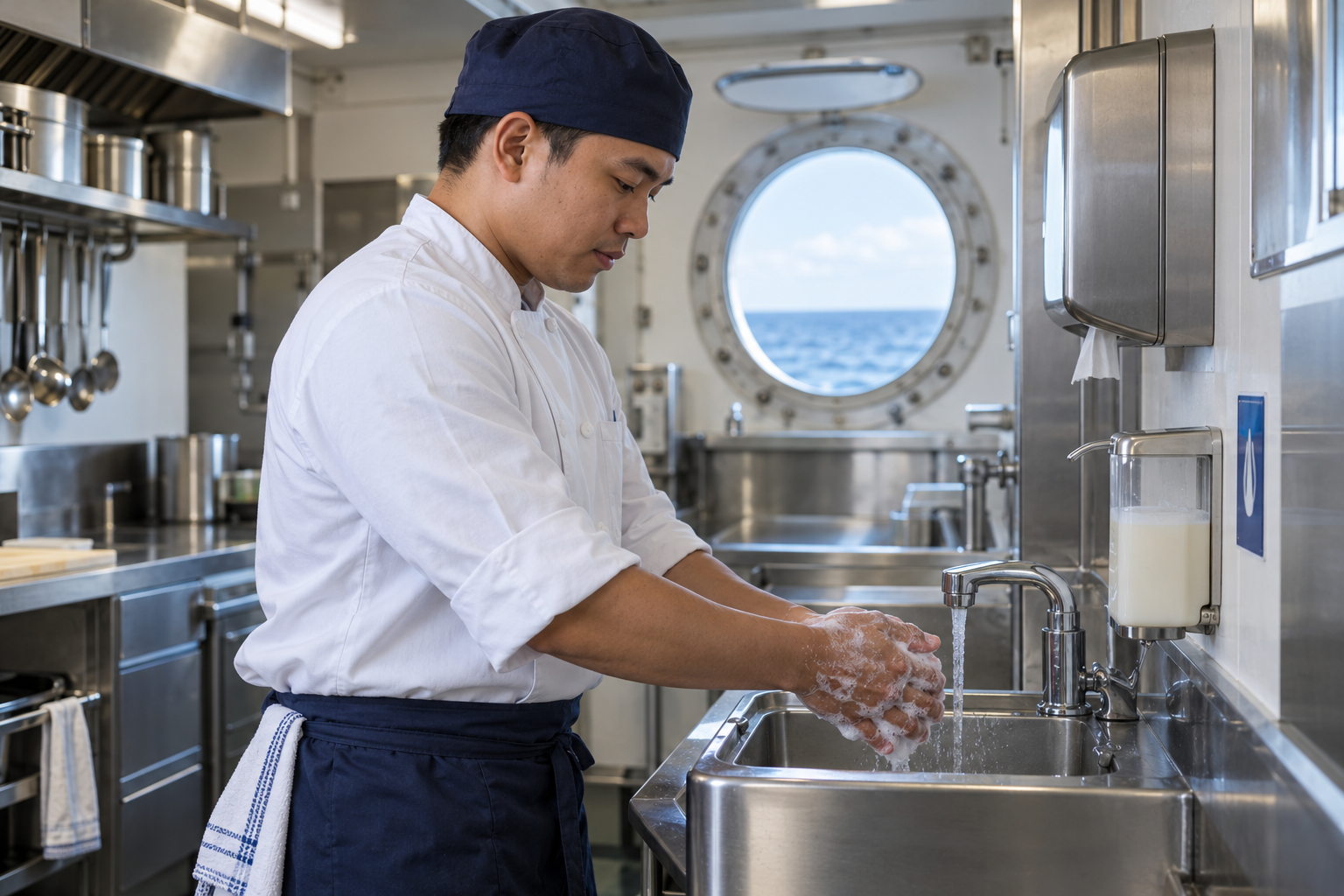
Personal hygiene in the shipboard galley
Follow a delivery from receiving to storage: check ingredient condition, keep raw and ready-to-eat foods separate, rotate stock and maintain suitable temperatures. During preparation and service, apply hand hygiene, cleaning and contamination-prevention practices.
LEARNING AREA 2
Explore the core skills involved in preparing meals in a shipboard galley. Topics cover ingredient preparation, cooking methods, portioning, galley organisation and safe equipment use. Participants learn how to organise daily cooking tasks and apply food-safety practices throughout meal preparation, with illustrated examples connecting the topics to work on board.
Ship’s cooks and galley personnel who prepare daily crew meals or want to strengthen their understanding of safe galley work.
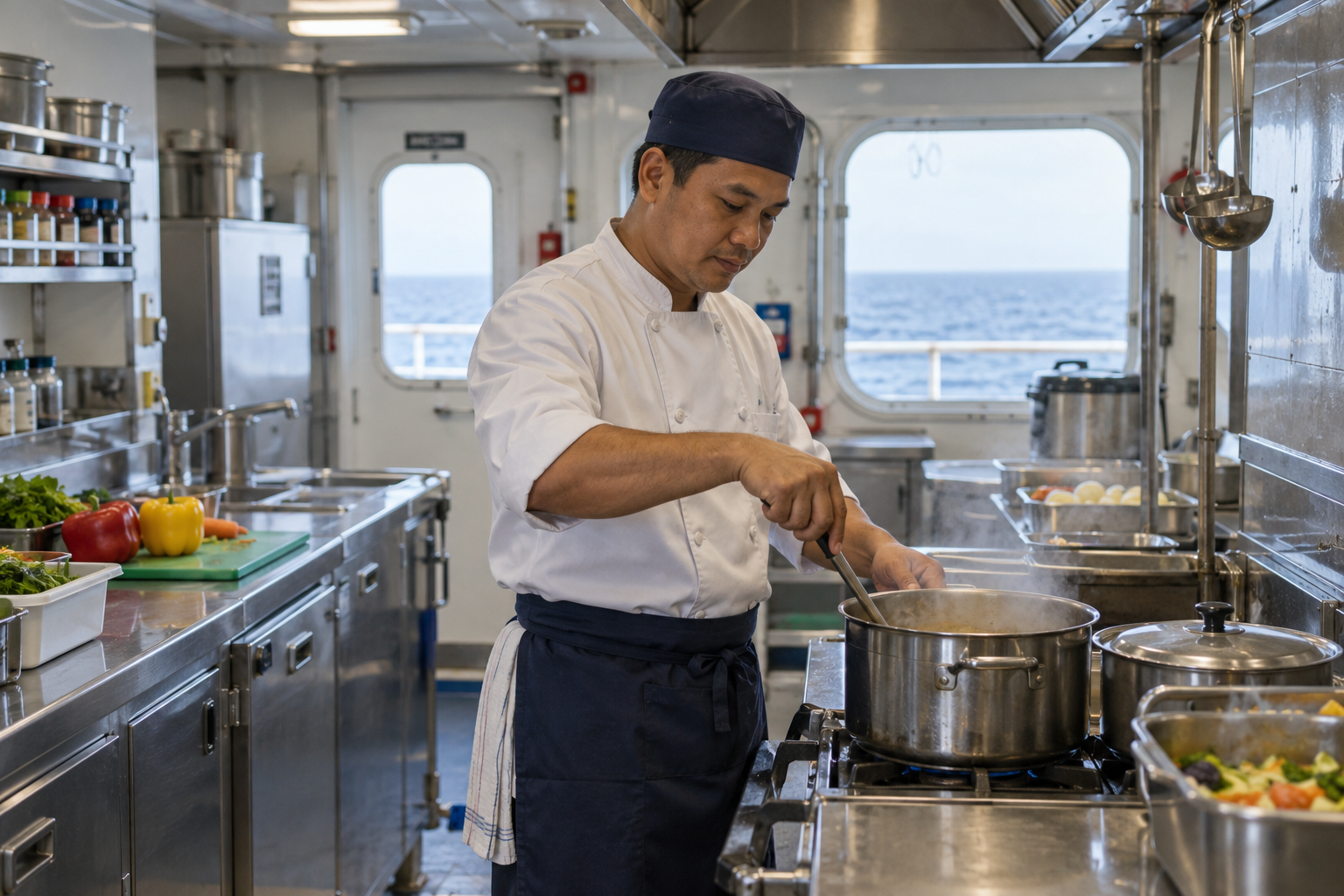
Daily meal preparation in the galley
Organise ingredients, equipment and cooking tasks for a crew meal. Choose suitable preparation and cooking methods, portion meals consistently and keep the work area clean while managing galley tasks safely.
LEARNING AREA 3
Develop an understanding of the steward’s role in maintaining hygienic service and comfortable onboard spaces. The overview covers food and beverage service, table setup, handling serving utensils, cleaning and housekeeping. Illustrated modules show how attention to cleanliness, presentation and professional service supports the daily needs of the crew and guests.
Stewards and crew members involved in food and beverage service, dining-area care and onboard housekeeping.
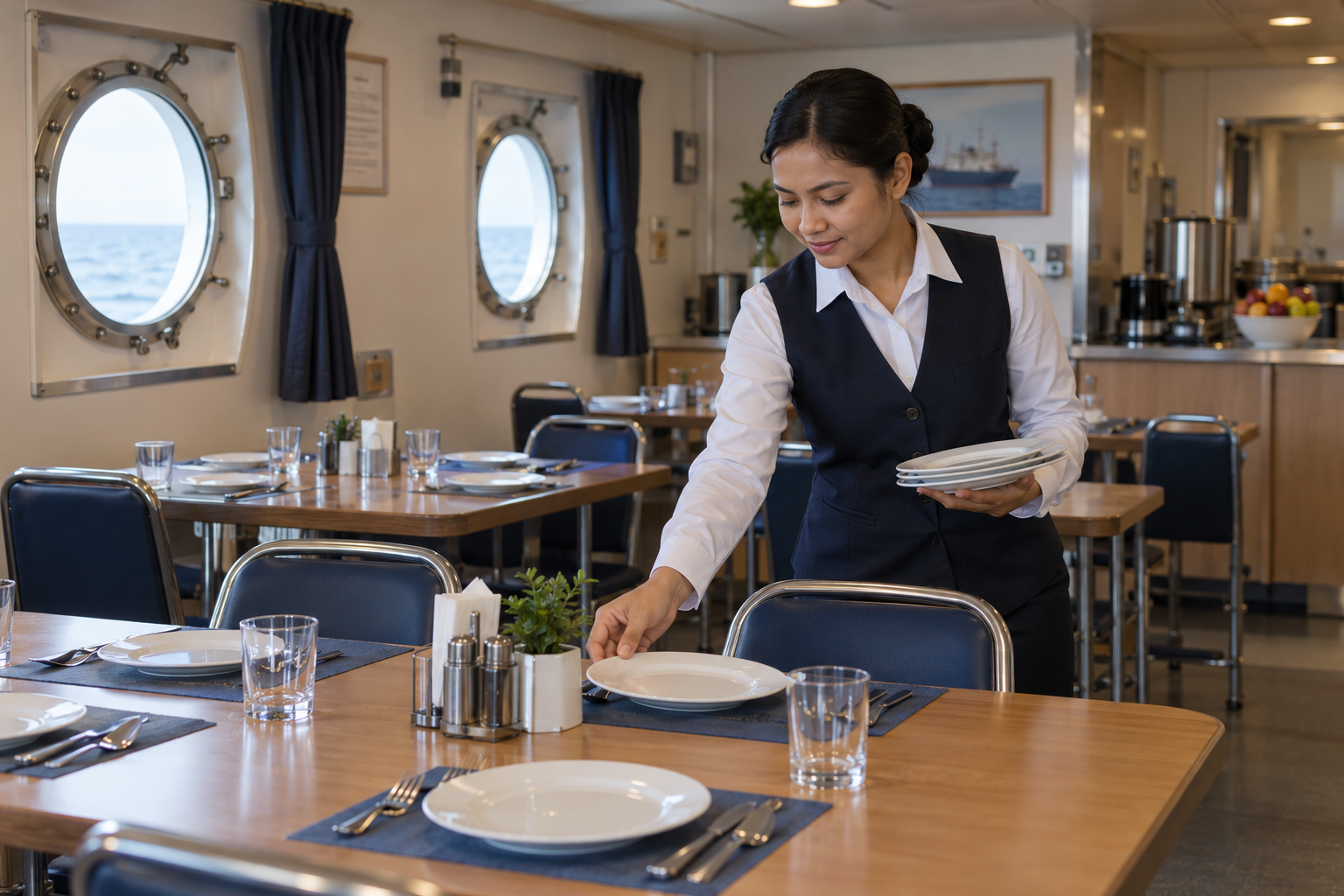
Professional onboard dining service
Prepare a clean dining area, set tables and handle food, beverages and utensils hygienically. After service, organise cleaning and housekeeping tasks to maintain orderly shared and accommodation spaces.
LEARNING AREA 4
Explore Hazard Analysis and Critical Control Points (HACCP), a systematic approach to managing food-safety hazards. The overview introduces biological, chemical and physical hazards, the seven HACCP principles, critical control points and critical limits. Participants also examine monitoring, corrective actions and records that help support consistent food-safety controls in onboard operations.
Cooks, stewards and personnel involved in monitoring food operations or supporting onboard food-safety procedures.
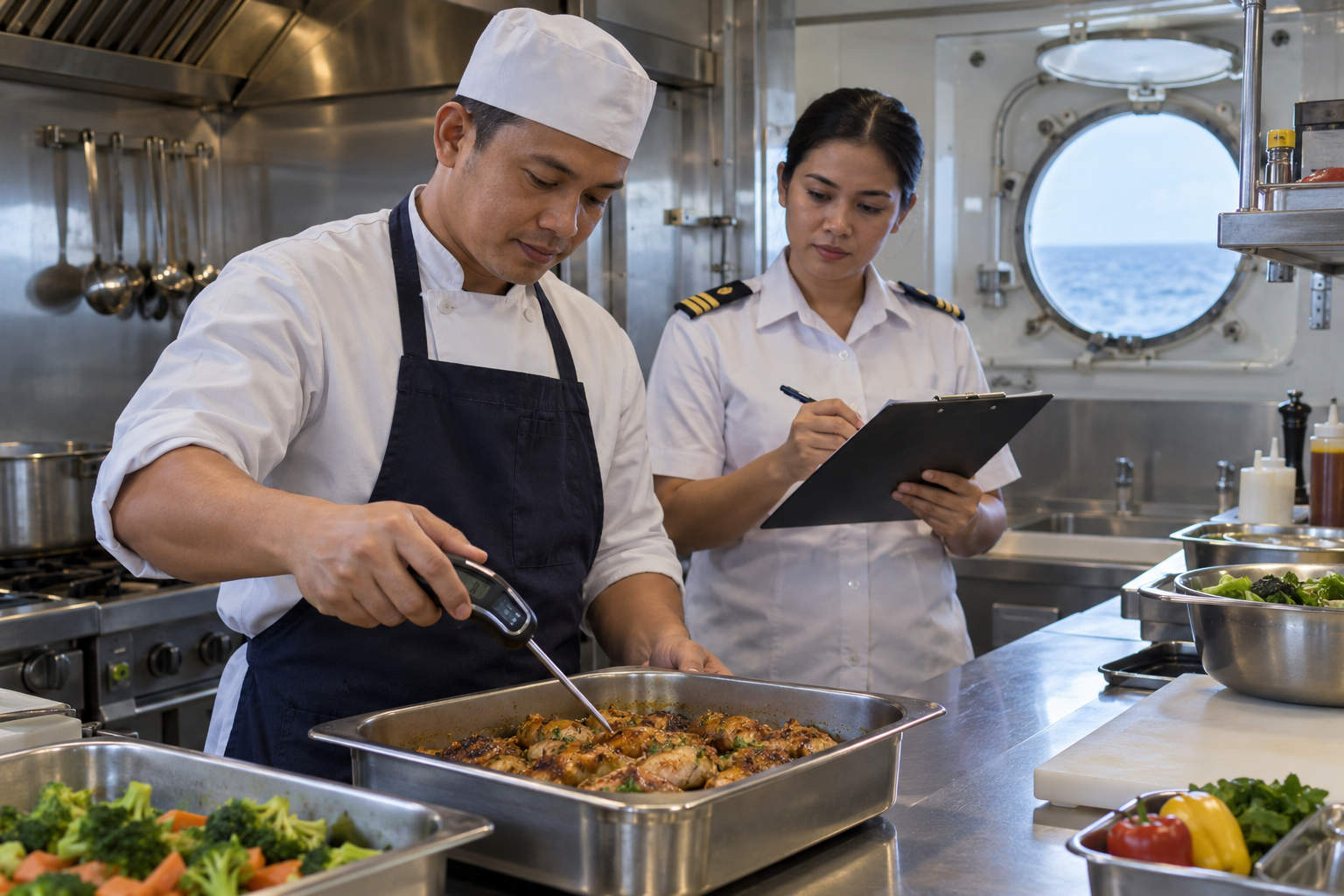
Food temperature monitoring and records
Review a step in the food process, identify potential hazards and consider the controls needed. Use monitoring records to check critical limits and document corrective action when a control is not met.
Select a package that matches your role and training needs. Review the included programs and certificates before registering.
Combine safe food-handling practices with essential cooking and galley skills for work on board.
Combine safe food-handling practices with professional onboard service and housekeeping skills.
Learn to identify food-safety hazards and apply HACCP principles, including monitoring, corrective actions and records.
Contact our training team to discuss training arrangements for your selected program. Certificates are awarded to participants who complete their selected program and pass the required assessment.